
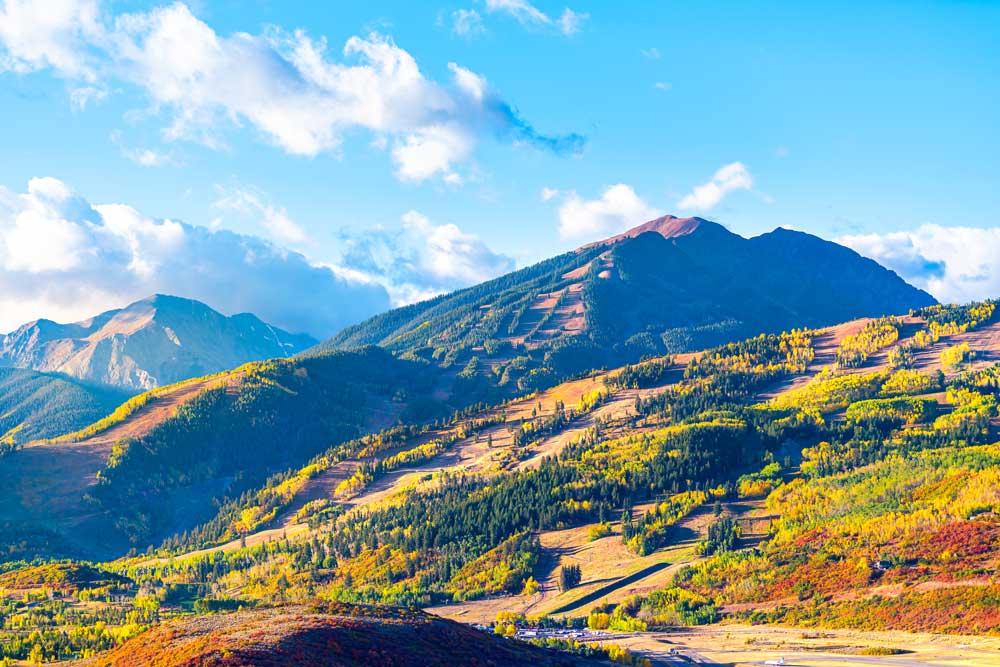
There’s a short window every fall when the entire Roaring Fork Valley seems to light up at once — aspens turning gold from the high country down to the river towns, one elevation band at a time. Because color moves downhill as the weeks pass, you don’t have to pick just one weekend or one road. Here’s where locals point their cars, and roughly when to go.
Independence Pass: The High Country Classic
Highway 82 over Independence Pass is the valley’s signature fall drive, cresting the Continental Divide at 12,095 feet between Aspen and Twin Lakes. The aspen groves on both sides of the pass turn early — typically the last week of September into the first days of October — and the high tundra above treeline adds its own gold and rust tones to the display. Pull-outs and the Grottos give you easy stops without a hike. One thing to plan around: the pass closes for the winter every year, usually in early-to-mid November, so this is very much a “go now” drive rather than one to save for later in the season.
Castle Creek Road and Ashcroft
South of Aspen, Castle Creek Road winds through the Elk Range toward the historic ghost town of Ashcroft. It’s a slower, more intimate drive than Independence Pass — fully paved, lightly trafficked, and lined with wide swaths of gold aspen against dark evergreens. Because it sits at a slightly lower elevation than the pass, it tends to hold color for a few extra days into early October.
McClure Pass and the West Elk Loop
Head south from Carbondale on Highway 133 and you’ll climb into McClure Pass, part of the West Elk Loop Scenic Byway. This is valley locals’ pick for a longer day trip: broad hillsides of aspen, views toward Chair Mountain, and historic stops in Redstone and Marble along the way. Because Carbondale and the lower valley sit at a lower elevation than Aspen, this stretch typically peaks about a week to ten days later than Independence Pass — often the first or second week of October — which makes it a good second act once the high country has already dropped its leaves.
From Basalt, the Fryingpan River Road follows the river up toward Ruedi Reservoir, mixing canyon views with aspen-covered hillsides and a payoff at the reservoir itself, where calm water reflects the color on a still morning. Like McClure Pass, the lower elevation here means the show holds later into October than the high passes do.
Closer to Home: Red Mountain and Four Mile Road
You don’t need a full day trip to see good color. In Glenwood Springs, the hike up Red Mountain offers valley-wide views over gold hillsides, and Four Mile Road toward Sunlight Mountain Resort is a scenic short drive past old barns and changing slopes that’s easy to fit in after work or on a weekend morning.
A Few Notes for Timing It Right
Fall color in the valley moves roughly from high to low: above 10,000 feet typically peaks in the last week of September, while the lower valley towns like Carbondale often peak in early-to-mid October. If you only have one weekend, the days right around the end of September tend to hit the widest range of elevations at once. And since a single windstorm or hard freeze can strip a hillside overnight, don’t wait too long once you hear the reports are good — this display never lasts as long as anyone wants it to.
Conditions and road closures can change quickly this time of year. Check CDOT’s Independence Pass status before heading up, and always check current road conditions before a mountain drive.